The Bandwidth Demand Curve: Those Moments of “Sudden” Surge
In Q4 2024, while providing IT Operations Outsourcing services to a medical device client in Shunyi, we encountered an interesting phenomenon: their gigabit network had run for a full year with utilization never exceeding 40%, yet after they brought a new ERP system online in early December, the core switch began issuing frequent alerts within the first week of launch. This is not an isolated case, but the typical script most enterprises follow before a network upgrade—demand growth is never linear, but rather a series of step changes. Video conferencing has been the “big eater” of bandwidth in recent years. Three years ago 1080P meetings were still a luxury; today 4K meetings are becoming commonplace, and each participating endpoint requires 15–20 Mbps of stable bandwidth. When a 20-person department holds a meeting simultaneously, combined with screen sharing and data transfer, peak bandwidth demand easily exceeds 300 Mbps. If an enterprise still retains an outdated video conferencing system, or uses a cloud-based meeting service, that figure must be multiplied by a redundancy factor of 1.5 to 2. Data backup and file transfer are another “hidden landmine.” Many enterprise IT managers assume backups run in the early hours and don’t affect daytime operations. But the reality is that backup windows are getting shorter—previously there was an 8-hour window; today many enterprises have only 4 hours or even less. Meanwhile, backup data volume is growing exponentially: for a mid-sized manufacturing enterprise, a full backup three years ago was 800 GB; today a conservative estimate starts at 6 TB, and with CAD drawing version management or video surveillance retention, that figure can reach over 20 TB.In 2023, average bandwidth demand among Beijing enterprises grew roughly 35-40% year over year, yet the refresh cycle for most enterprise network core equipment is 5–7 years. This is why many IT managers feel that “the network is getting slower”—it isn’t that the equipment has failed, but that demand has outrun the plan.
Upgrade Timing: Not a Technical Question, but a Question of Timing
When should you upgrade from gigabit to 10-gigabit? I’ve seen two extremes: the “over-anxious” type, who rush to upgrade while the network is still perfectly healthy, and the “put-it-off” type, who only act once business complaints explode. Both waste money. A genuinely good upgrade window should meet the following conditions: First, peak utilization of the existing network has exceeded 60% for three consecutive months. Below that figure, the cost-effectiveness of an upgrade is not high enough. Going from gigabit to 10-gigabit is not as simple as swapping out a switch—the link from the wiring closet to the equipment room may need to be re-run entirely, and Cat5e cable must be replaced with Cat6 or fiber, all of which are costs. Second, there is a clear business driver. The medical device enterprise mentioned above needed to upgrade because its new ERP system went live. This type of demand has an advantage: the ROI is clear, the upgrade investment can be calculated, and it won’t be sent back when reported to the boss. Upgrading simply because “it feels like we’ll need it later” often can’t clear internal budget approval at all. Third, the equipment lifecycle milestone. The design life of most network equipment is 5 years, but in practice various minor issues begin to appear after about 4 years of stable operation. Beyond 5 years, the failure rate rises noticeably, and once the vendor ends technical support, security patches and driver updates are gone. Replacing aging equipment at the same time as the upgrade is the most sensible timing—solving two problems within a single downtime window.A Phased Plan: A Smooth Transition from Gigabit to 10-Gigabit
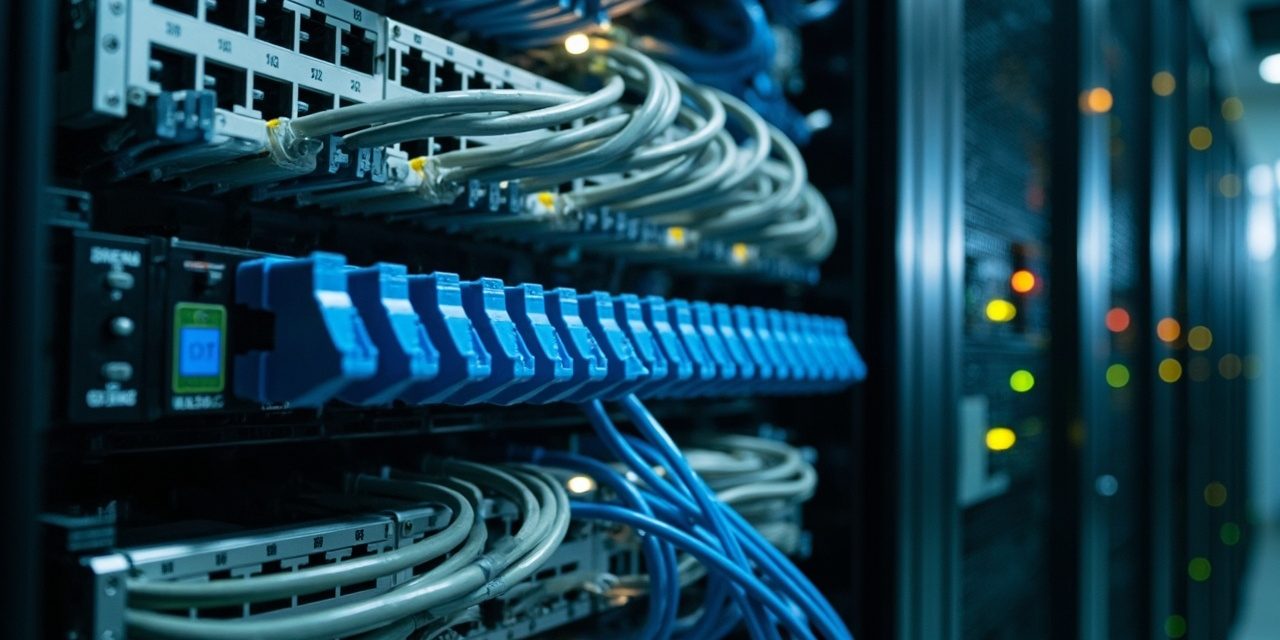
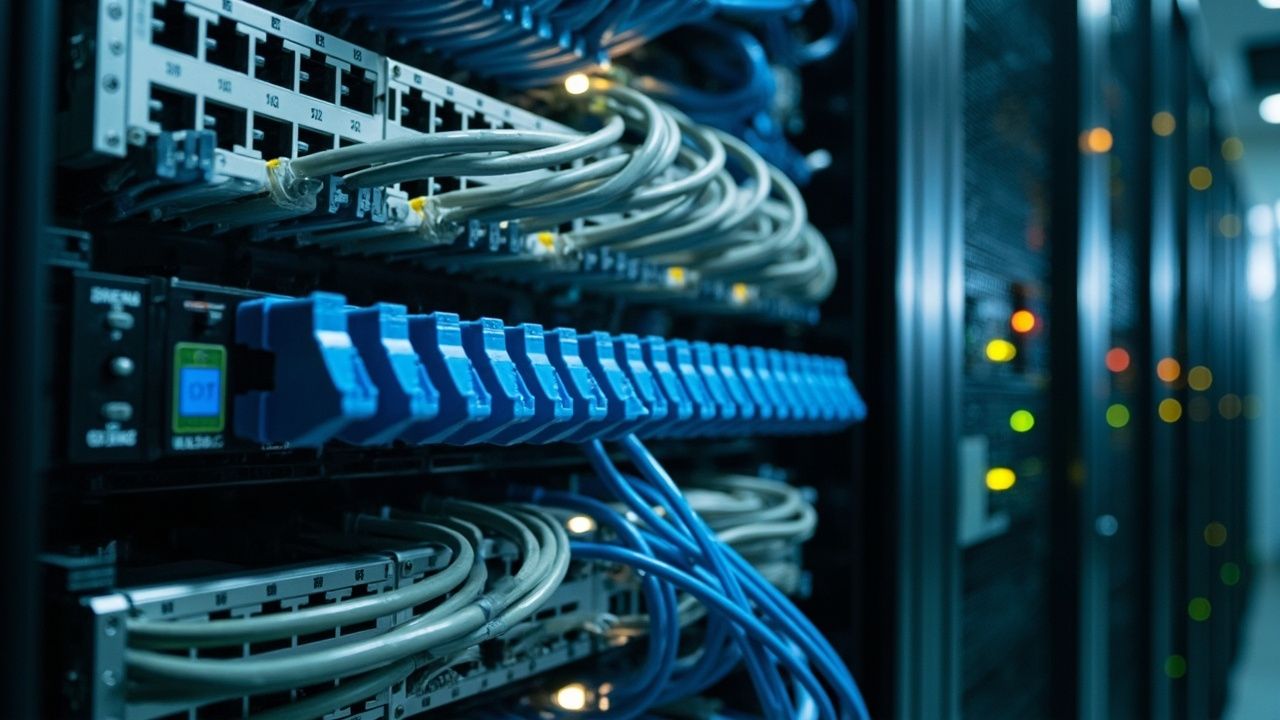
The worst thing you can do when upgrading a network is take a “one-size-fits-all” approach. I’ve seen an enterprise get carried away and replace its entire campus network with 10-gigabit equipment, only for commissioning problems with the new equipment to bring business to a complete halt for two full days. A 10-gigabit upgrade should be a gradual process; the most reliable approach is to advance layer by layer: core–aggregation–access.- Phase One: Start with the core layer. The core switch is the “heart” of the entire network, and upgrading it can immediately relieve the most severe congestion points. A 48-port core switch with 10-gigabit uplinks costs RMB 20,000–40,000 from mainstream brands, well within reach of small and medium-sized enterprises. The key at this stage is choosing the right equipment: the core layer must support wire-speed forwarding with no bandwidth bottleneck, and must reserve enough expansion slots for adding line cards later. When providing Network Equipment Package services to clients, Siwenlide plans capacity based on the enterprise’s business growth over the next three years, so that equipment doesn’t need to be replaced shortly after purchase.
- Phase Two: Upgrade key aggregation links. Once the core layer upgrade is complete, the next step is the aggregation links for the server farm and key business areas. The connection from servers to the core must be 10-gigabit, otherwise no matter how good the server performance is, the network becomes the bottleneck. This phase has an easily overlooked issue: server network card compatibility. If servers use older gigabit network cards, they need to be upgraded in step, or a “barrel effect” will emerge, with the bandwidth of the entire link constrained by the shortest stave.
- Phase Three: Roll out the access layer in batches. The access layer upgrade can move more slowly, starting with the areas where usage is most intensive, such as R&D and design departments, design centers, and call centers. These departments are typically heavy users of large files and high-bandwidth applications, and are the hotspots for network complaints. There’s a useful trick for the upgrade: within the same wiring closet, upgrade some outlets to 10-gigabit first while keeping the rest on gigabit, observe actual business usage for a period, and then decide whether to upgrade fully. This approach both controls the initial investment and reduces upgrade risk.
There is a benchmark worth referencing: the priority order for access layer upgrades should be—video-conferencing-intensive areas > data backup sources > departments with frequent large-file exchange > general office areas. Advance in this order, and every dollar spent shows an immediate effect, with positive feedback from the business.
There are a few more details to watch during the upgrade. On the choice of fiber links: if the distance from the wiring closet to the equipment room is within 100 meters, Cat6 cable can handle 10-gigabit transmission; beyond 100 meters you must use fiber, and single-mode fiber can support distances of tens of kilometers. PoE power devices should also be checked—many older PoE switches don’t support the 90W PoE++ standard, and if you plan to deploy WiFi 6E or WiFi 7 APs later, you may need to replace the equipment.
For manufacturing enterprises that have already reached a certain scale, a 10-gigabit upgrade is not just a matter of swapping out a switch. The VLAN segmentation and isolation strategy among the industrial network, surveillance network, and office network on the shop floor all need to be reworked. When we provided IT Operations Outsourcing services to a manufacturing enterprise in Huairou, we found that the control network for the AGV carts on their shop floor was mixed together with the office network—if such hidden risks aren’t addressed in advance, a 10-gigabit upgrade may actually amplify the problem.
Is your Beijing enterprise’s IT hitting a bottleneck? Siwenlide’s integrated solutions—backed by 14 years and 1,000+ clients—are ready for your consultation.
☎ 400-686-2011 · 📍 Room 3-1002, 9F, Building 3, No. 1 Huihai South Road, Beijing Airport Economic Core Zone · Contact Us
※ During the contract term, an enterprise broadband or private line connection is included, keeping your business connectivity more stable.