
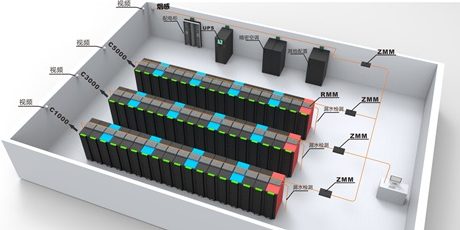
1. Where possible, use the same contractor for server room fit-out and cabling. Using separate contractors can make it difficult to coordinate cleaning, design, and construction. An integrated service helps streamline cabling work.
2. Select a contractor with proven experience in server room fit-outs. Visit their project sites to assess their technical capabilities and delivery capacity, as many companies claim to have fitted out Internet Data Center (IDC) facilities.
3. Before starting the fit-out, invite consultants to inspect the site and propose a solution. Review their designers’ server room layouts as a reference, then refine and finalize the plan based on internal requirements.
4. Keep low-voltage systems separate from power circuits.
5. Ideally, assign two people to oversee the server room project. They can work together, rotate coverage when overtime is required, and coordinate responses to issues as needed.
6. Inspect samples before ordering specific equipment models to avoid discrepancies.
7. Effective cleaning during the early stages remains an unresolved issue; no approach has been identified yet.
Design Details:
1. Use dedicated network cabinets for network cabling. Two main configurations are available: a. Install patch panels and switches in alternating pairs within the same cabinet. b. Install patch panels and switches in separate cabinets and connect them with patch cords. Both configurations facilitate cabling.
2. Select high-quality antistatic raised flooring with a load capacity of at least 700 kg. Use Shenfei flooring.
3. Provide dust protection for the ceiling, a gas fire suppression system, moisture protection for the walls, and high-quality paint. Use a steel support structure to ensure adequate floor load capacity, and provide antistatic floor protection and lightning protection. Lightning protection requirements for the building differ from those for server room equipment.
4. Network cables can be routed in two ways: a. Under the raised floor, with sufficient cable routing clearance of at least 30–40 cm. b. Above the cabinets, using properly installed cable trays.
The routing method determines patch panel placement, air conditioner placement, dust protection measures, and heat dissipation arrangements. Downflow air conditioning is recommended to avoid issues caused by dripping condensate.
5. When selecting a network cable routing method, consider future maintenance access and practicality. Group cables by cabinet rather than by service network, with one bundle per cabinet. Number the cables sequentially and assign them to patch panel ports in the network cabinet according to that sequence. Route each cabinet’s cable bundle separately.
6. Cable ducts and trays must have sufficient width, height, and capacity. Use sweeping bends rather than sharp right-angle turns. Minimize cable crossings, while allowing for unavoidable crossings in the routing design. Duct layouts for server cabinets and network cabinets will differ because cables converge at the network cabinets.
7. Position three-pin outlets, waterproof outlets, and similar fittings beneath the raised floor one floor tile in front of the corresponding server cabinet. Where there are few cables, they may be placed within the cabinet’s own floor tile area, although this is not recommended. Outlets for network cabinets must be placed one floor tile in front. When cutting cable openings beneath cabinets, account for the floor panel’s load-bearing capacity. Position openings toward the front of the load-bearing panel to facilitate cable pulling.
8. Provide additional three-pin outlets throughout the room for future needs.
9. Where multiple network cabinets are installed, provide a dedicated patch panel for interconnecting them to support future network configuration and maintenance.
10. Patch panel placement differs between network cabinets and server cabinets: patch panels are installed at the front of network cabinets and at the rear of server cabinets. Cable lengths must account for this difference.
11. Ensure adequate moisture and dust protection for server room walls to prevent patchy yellow discoloration.




